
Buying a Home With a Partner When You're Not Married: What to Sign
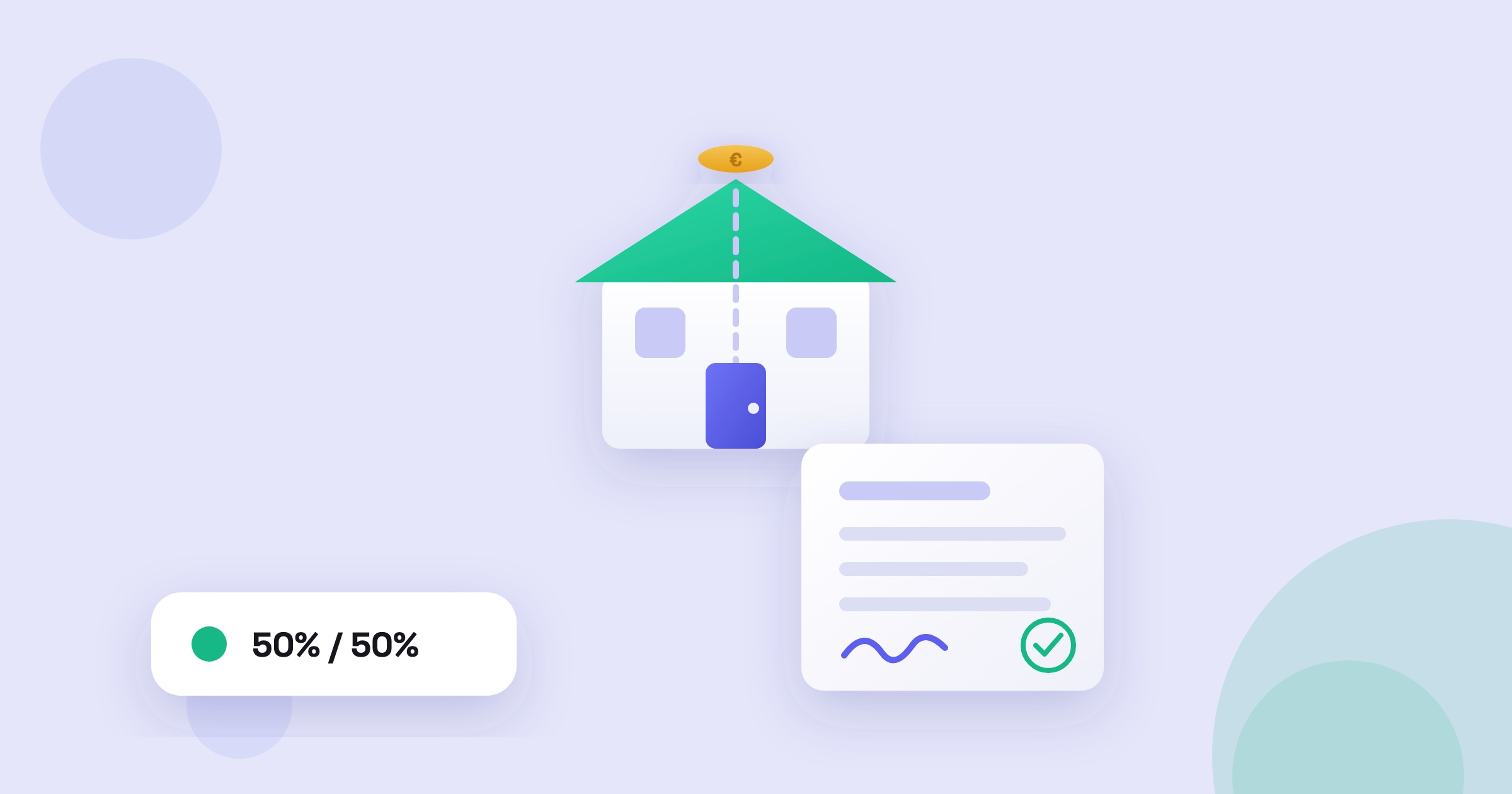
More and more couples buy a home together without going through the courts or the civil registry. It's perfectly possible, but there's a catch: when there's no marriage, there's no legal regime that divides things by default if something goes wrong. The only thing that protects you is what you put in writing. Let's look at exactly what that is.
Buying a home with a partner when you're not married leaves you in joint ownership (proindiviso): co-owners of a percentage each, with no physical division of the property. That percentage is set in the deed and it's what rules — not the relationship. Without marriage or a registered civil partnership, what divides rights and protects each of you is what you sign, not what you feel.
Joint ownership: what being co-owners means
When you buy together without being married, the property goes into joint ownership (proindiviso) — also called co-ownership or a community of property: both of you own a percentage of the property at the same time, without there being a physical part that's "yours" and another that's "theirs". It's not that one of you gets the living room and the other the kitchen; you both own a percentage of everything.
This changes how decisions work: to sell the whole home you both have to agree. One of you can sell just their percentage, but finding a buyer for "half a house" shared with a stranger is, in practice, almost impossible.
The percentage in the deed is what counts
Here's the decision that really matters. The purchase deed states what percentage belongs to each of you, and there are two ways to set it:
- 50/50. The most common, and the fair split when you contribute the same.
- Based on the real contribution. If one of you puts down a bigger deposit or takes on more of the monthly payment, the split can be 60/40, 70/30, and so on. As this guide on ownership when buying as a couple explains, it's worth stating it expressly in the deed, because it's what sets each person's rights when you sell or split up.
And watch out for silence: if you state nothing, the law assumes it's 50/50. If one of you put down 70% of the deposit and you don't put it in writing, on paper you've given away the difference. Putting the right number in the deed isn't distrust; it's the only way for the money you put in to stay yours.
The cohabitation agreement: cheap and crucial
The deed sets the percentages, but it doesn't solve everything. For the rest — who pays which costs, what happens if one of you stops contributing, how you sell if you split up — there's the cohabitation agreement, which is worth raising to a public deed.
It's a document where you put the rules in writing before you need them. It costs little — on the order of under a hundred euros — and it's exactly the safety net that marriage provides by default and that nobody gives you. When there are no papers, this agreement is your papers. Before you draft it, the underlying conversation helps: talking about money with your partner without ending up in an argument is easier before you sign than after.
What happens if you split up: dissolution of co-ownership
The good legal news: nobody is trapped. Article 400 of the Spanish Civil Code establishes that no co-owner is obliged to remain in the co-ownership and that they can request the division at any time. In practice it's resolved in two ways:
- Dissolution of co-ownership (extinción de condominio). One of you buys out the other's share and keeps the whole home. It's the usual route and the cheapest, because it's taxed less than an ordinary sale.
- Judicial division of the shared asset. If there's no agreement, either of you can ask a court for it. Since the property is indivisible, it usually ends in a public auction, almost always below market price. It's the worst outcome for both of you.
The moral: agree in advance how you'd exit the home, so you don't depend on a court if the bad moment comes.
And the mortgage, separately
A point that confuses a lot of people: owning 50% doesn't mean owing 50% of the mortgage. They're two different planes. Ownership is divided by the deed; the debt, by the loan. If you both sign the mortgage, each of you is liable to the bank for 100% of it, even if in the home you own half and half. Property and debt aren't the same thing, and it's worth being clear on that before you sign. If you're also looking at the purchase, go over the costs of buying a home — that 10% almost nobody budgets for — and how to negotiate your mortgage.
Before you sign, get the numbers clear
Almost everything above is decided better with the figures in front of you: how much each of you puts down as a deposit, how much you contribute each month and whether the split in the deed matches reality.
In Inveriok you can track those contributions and see each person's net worth separately, so the percentage in the deed isn't a hunch but a number. And if you share an account for the home's costs, the three-account model is the structure built for exactly that. You can upload the bank statement and check that each of you contributes what was agreed: here's how transaction import works, without connecting the bank or handing your credentials to anyone.
Frequently asked questions
Can we buy a home together as a couple without being married?
Yes. You buy in joint ownership (proindiviso): both of you are on the title as holders of a percentage of the property at the same time, with no physical division. That percentage is set in the purchase deed and it's what determines your rights, not the relationship. Without marriage or a registered civil partnership, what protects you is what you sign.
What percentage of the home does each of you put in the deed?
Whatever you agree: 50/50 is the most common, but it can reflect the real contribution — for example 60/40 if one of you puts down a bigger deposit. It's worth stating it expressly in the deed, because it sets what each of you is owed when you sell or split up. If nothing is stated, the law assumes it's 50/50.
What is a cohabitation agreement and what is it for?
It's a document — ideally a public deed — where you put the rules in writing: what percentage belongs to each of you, who contributes what, how the costs are split and what happens if you separate. It costs little and it's the best safety net when there's no marriage to govern how things are divided by default.
What happens to the home if we separate?
Neither of you is obliged to stay in the co-ownership: article 400 of the Spanish Civil Code lets any co-owner request the division at any time. The usual route is a dissolution of co-ownership (extinción de condominio): one buys out the other's share. If there's no agreement, you can ask a court to divide the shared asset, which usually ends in auction.
Sources
- Spanish Civil Code (BOE) — articles 400 and 401: no co-owner is obliged to remain in the co-ownership and can request the division of the shared asset at any time.
- Fotocasa Life — ownership when buying a home as a couple: joint ownership (proindiviso), a 50/50 split or one based on contribution, and why it should be recorded in the deed.
- Arquitasa — dissolution of co-ownership: how joint ownership is dissolved and what happens if there's no agreement (judicial division and auction).
- iad España — buying a home as a couple: the cohabitation agreement and the precautions to take when there's no marriage.
- Finanzas para Todos (CNMV and the Bank of Spain) — free personal budgeting tools from the Financial Education Plan.
Disclaimer. This article is informational and is not financial or legal advice. Ownership, taxation and the effects of a break-up depend on your situation and on each region; if you have a specific question, consult a notary or a lawyer.