
Why You're Afraid to Check Your Bank Balance
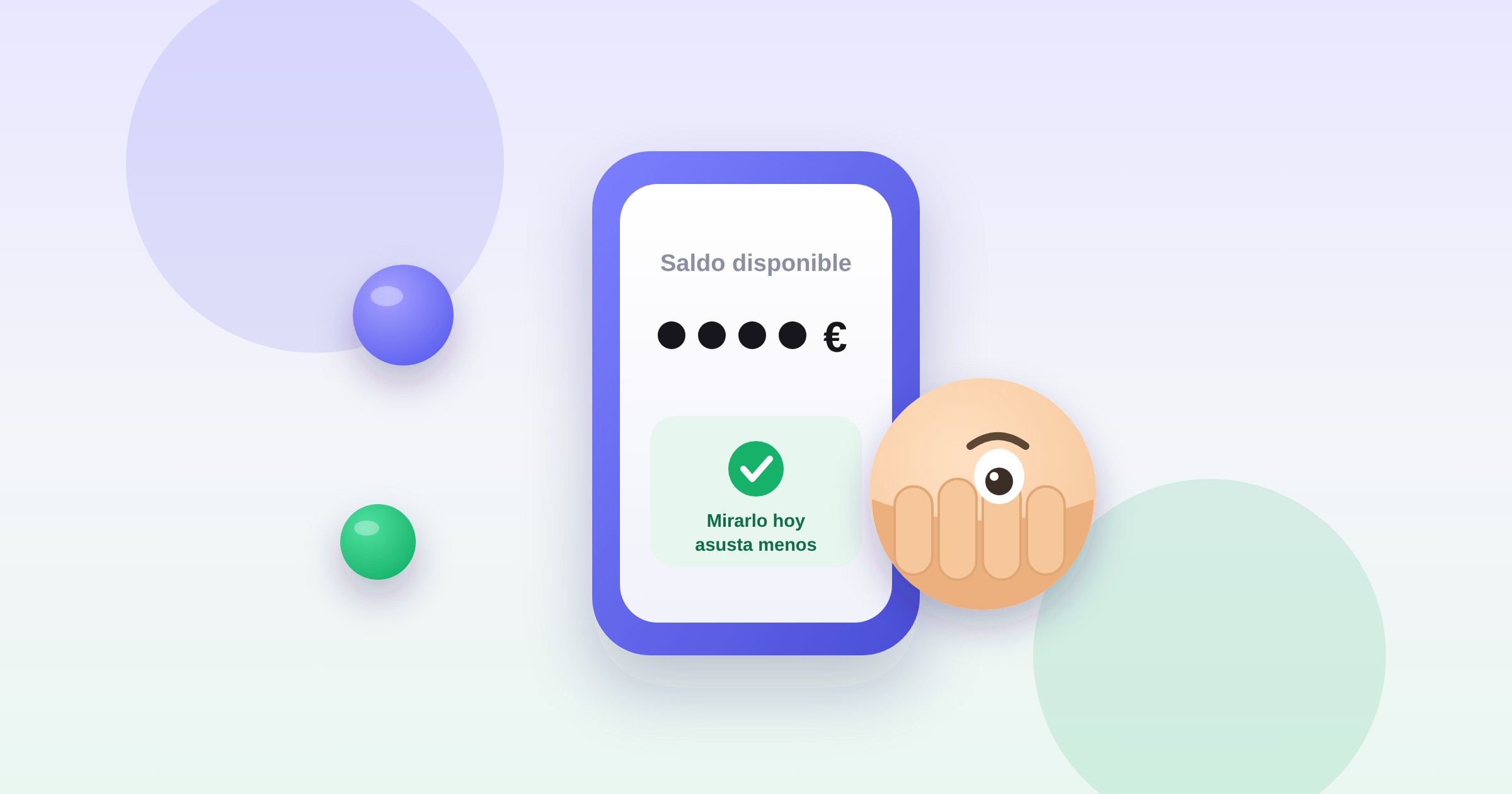
You open the banking app, see the balance icon… and close it without looking. Or you leave the bank's letters unopened in a drawer. You put off checking "until things calm down" — and that moment never comes. If that sounds familiar, you're not strange and you're not a mess: it has a name, financial anxiety, and it happens to far more people than you'd think.
It's not just you: it happens to almost everyone
The data makes this clear. Various studies put around 80% of Spaniards as reporting living with some degree of financial anxiety, and around 73% say they experience money-related stress. It's not a character flaw: it's a normal response to something we perceive as a threat, and that, on top of it, nobody taught us how to manage — 36% of adults admit they don't know enough to make good financial decisions.
Being common doesn't make it harmless, but it does lift a layer of guilt: the problem isn't that "you're bad with money." It's that looking feels scary, and avoiding is the most human thing in the world.
Why we avoid looking
Avoidance works… in the short term. If I don't look, it isn't real, and I spare myself the discomfort right now. The problem is that in the long run it does exactly the opposite of what you're after:
- Uncertainty scares you more than reality does. Almost always, what you imagine is worse than the real number. The fear doesn't live in your balance: it lives in "I don't know how much I have."
- What you don't watch grows out of control. The bills you don't see, the subscription that keeps charging, the small expenses that pile up — they all feed on you not looking.
- The dread snowballs. Every day you don't look, the problem grows bigger in your head, even though almost nothing has changed in the account itself. You spend energy trying not to think about it.
How to start looking without it hurting
1. Change the goal: it's not about judging yourself, it's about informing yourself. You're not opening the account to punish yourself for what you spent — you're doing it to know where you stand. Think of it as a weather report, not an exam. It rains or it's sunny; it's not your grade.
2. Start small, with a time limit. 30 seconds, once. Just the balance and the last three or four transactions. Nothing else. Today's goal isn't a perfect budget: it's breaking the avoidance.
3. Do it at the same time, on a fixed day. Whatever becomes routine stops being scary. A glance every Sunday morning weighs far less than an "I'll look when I finally work up the nerve."
4. Let the information come to you. A big part of the fear is having to go looking for bad news. If instead something alerts you only when it actually matters — "you're missing a transaction," "you're over budget" — you stop having to face a cold statement on your own.
How Inveriok makes it easy
In Inveriok you don't have to dig through a statement to know if something's wrong. The balance check warns you if a transaction is missing, and you see your situation at a glance, organised by category, with no raw scary numbers. It's the difference between "I don't want to look" and "I've already looked, and it wasn't that bad." And it's the foundation for breaking the paycheck-to-paycheck cycle: once what you feared becomes a concrete, manageable number, it stops being scary.
If money anxiety is overwhelming you or affecting your daily life — your sleep, your mood, your relationships — talking to a mental health professional helps, and it's not an overreaction. Taking care of your finances is also taking care of yourself.
Frequently asked questions
Is it normal to be afraid to check your bank balance?
Yes. It's a widespread form of financial anxiety: studies in Spain put it at around 73-80% of the population. It's not a flaw in you; it's a human response to something we perceive as a threat and that nobody taught us how to manage.
Why do I avoid checking my balance even though I know I should?
Because avoiding it removes the discomfort short-term: "if I don't look, it isn't real." The problem is that in the long run uncertainty scares you more than reality does, and whatever you don't watch grows out of control.
How do I start if I haven't looked in months?
With a 30-second glance at just the balance and the last few transactions, without analysing anything else. The goal is to break the avoidance, not build a perfect budget. Repeat it on the same day each week.
Doesn't checking the account often increase anxiety?
It's hard at first, but checking little and often reduces the uncertainty that feeds the fear in the first place. Seeing a concrete number is almost always less distressing than imagining one.
Sources
- Finanzas para Todos (CNMV and Bank of Spain) — free personal budgeting tools from Spain's national financial education plan.
- OCU — Money — independent reviews of accounts, fees and savings products.
- Bank Customer Portal (Bank of Spain) — your bank must send you a monthly statement with every transaction on the account.
- Plazo — Report on financial stress in Spain (~73% of consumers).
- Funcas — 36% of Spaniards aged 18-64 admit they don't know enough to make financial decisions.
Disclaimer. This article is informational and supportive in nature, not financial or psychological advice. Financial anxiety is a sensitive topic: if it's significantly affecting you, consider talking to a mental health professional.